

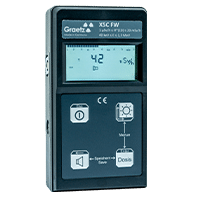












With the expiration of the transitional provision of § 62 para. 2 sentence 1 MessEG on December 31, 2024, the regulatory framework has fundamentally changed. Type approval certificates are now limited to a validity period of ten years – extension is not provided for. Instead, complete recertification is required, which involves considerable personnel and financial expenditure as well as processing times of several years. For GRAETZ, this meant a sober cost-benefit assessment – particularly with regard to devices based on Geiger-Müller technology: a proven technology that has largely reached its technological limits.
The Decision: Not a Withdrawal, but Strategic Realignment
GRAETZ has decided not to apply for new type approvals for devices based on Geiger-Müller technology. This decision is not a withdrawal from the market. Rather, it creates the freedom to invest resources specifically in modern sensor technologies – technologies that enable higher measurement accuracy, a broader dynamic range, and better digital integration.
Another aspect: as long as a type approval certificate is valid, any modification to the device is excluded after its issuance. Those who rely on certification also commit to stagnation in product development.
Security of Supply Remains Guaranteed
For users who require devices certified under the Measuring and Calibration Act, no supply gaps will arise. GRAETZ has established strategic cooperations with manufacturers whose devices have valid type approval certificates:
- For calibratable personal dosimetry, the DMC 3000 from Mirion Technologies is available.
- For calibratable area dosimetry, the SSM1+ from Seibersdorf Laboratories.
Furthermore: not every application necessarily requires a device compliant with the MessEG. § 90 para. 1 StrlSchV permits the use of suitable radiation measurement devices in many cases – an option that is often more cost-effective in practice without compromising measurement quality.
All GRAETZ devices continue to be manufactured and calibrated within the existing quality management system. The calibrations are traceable to the national standards of the Physikalisch-Technische Bundesanstalt.
If you have questions about the impact on your application or suitable alternatives, we are happy to assist you.